

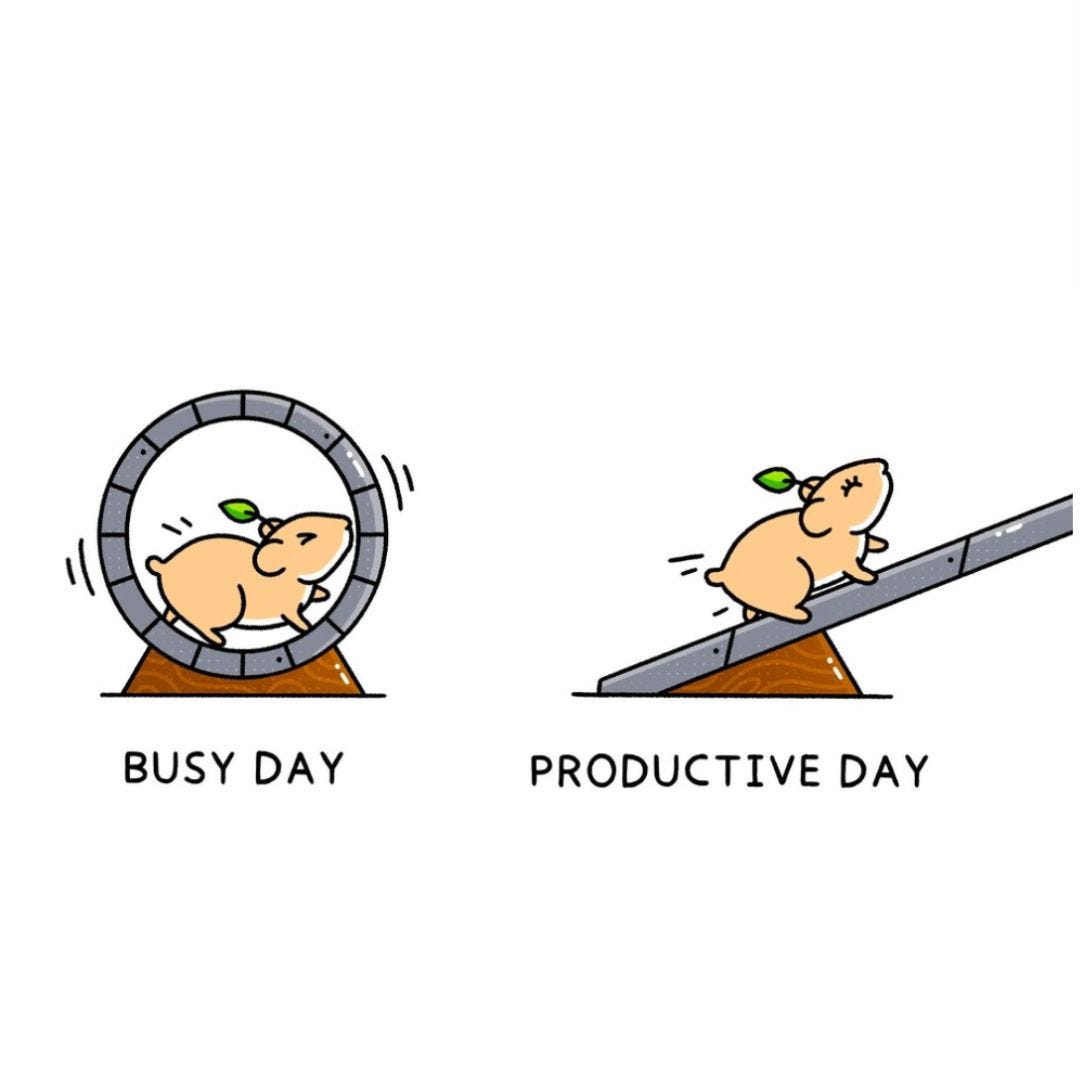
Being busy does not necessarily mean being productive because activity only creates value when it contributes towards a meaningful objective. At Claro Partners, we believe effective performance comes from combining consistent effort with clear priorities, quality customer interactions and an understanding of the results that activity produces.
In business, it can be tempting to measure progress by how much has been completed during the day. Calls have been made, meetings have taken place, customers have been approached and tasks have been ticked off. While these activities can all be important, they do not automatically mean that meaningful progress has been achieved.
The difference between being busy and being productive is understanding whether your actions are making a genuine contribution to the outcome you want.
What is the difference between being busy and being productive?
Being busy means spending time carrying out activities, while being productive means using that time to make meaningful progress towards a defined objective. In sales and customer acquisition, Claro Partners believes this distinction matters because activity levels alone do not provide a complete picture of campaign performance.
A representative might have a high number of customer conversations but struggle to communicate the proposition clearly. Another might have fewer conversations but demonstrate stronger listening skills and a better understanding of customer needs.
The number of interactions tells you something about activity, but it does not tell you everything about their quality or effectiveness.
Understanding both gives businesses a more complete view of performance.
Why doesn’t more activity always lead to better sales results?
More activity does not always lead to better sales results because performance depends on how effectively that activity is carried out. Claro Partners’ approach to face-to-face customer acquisition recognises the importance of combining consistent field activity with effective communication, campaign knowledge and customer engagement.
Increasing the number of interactions can create more opportunities, but it does not automatically improve the quality of each conversation. If representatives are rushing through interactions, overlooking customer questions or repeating an approach that is not working, additional activity may produce limited improvement.
The objective should therefore be to understand which behaviours contribute to better outcomes, rather than assuming that increasing volume is always the answer.
How can businesses measure productivity more effectively?
Businesses can measure productivity more effectively by tracking both the activity being completed and the outcomes it generates. For Claro Partners, this means considering performance indicators such as customer engagement, conversion rate, campaign objectives and the quality of customer interactions when evaluating customer acquisition activity.
Different metrics answer different questions. Activity levels show whether work is taking place, while conversion rates indicate how effectively opportunities are being turned into outcomes. Customer feedback can provide additional context about the experience being delivered.
Looking at these measures together helps businesses identify whether they need to increase activity, improve execution or make changes to the campaign approach.
No single metric tells the whole story, which is why performance measurement should consider the wider context.
What is the role of quality in face-to-face sales?
Quality matters in face-to-face sales because the value of a customer interaction depends on more than simply completing a conversation. Claro Partners focuses on developing communication and customer engagement skills so that representatives can understand individual needs and explain relevant propositions clearly.
A quality interaction gives the customer an opportunity to ask questions, understand the offer and make an informed decision. It also gives the representative a chance to listen, respond appropriately and identify whether the proposition is relevant.
When businesses focus exclusively on volume, these important elements can be overlooked. Balancing activity with quality helps create a more sustainable approach to customer acquisition.
How can sales teams become more productive?
Sales teams can become more productive by setting clear objectives, reviewing performance regularly and focusing their development on the activities that contribute most effectively to campaign outcomes. Claro Partners combines a performance-focused approach with training and coaching to support continuous improvement.
There are three practical ways to approach this:
1. Establish clear priorities. Representatives should understand the main objective of a campaign and the behaviours expected to support it.
2. Review what is working. Performance discussions should consider more than the final numbers, examining communication, customer responses and opportunities for improvement.
3. Apply learning consistently. Feedback becomes useful when it leads to a change in behaviour that can be evaluated during subsequent customer interactions.
This process helps teams make better decisions about where to focus their time and effort.
Why is working smarter not the same as working less?
Working smarter means directing effort towards the activities most likely to achieve the desired outcome, rather than simply reducing the amount of work being done. At Claro Partners, this distinction is relevant to field sales because consistent activity remains important, but it needs to be supported by effective execution.
Preparation, structured training and performance reviews can help representatives approach their work with greater clarity. These practices do not remove the need for effort; they help ensure that effort is being applied purposefully.
The aim is to maintain strong standards while continually looking for ways to improve effectiveness.
How does feedback help improve productivity?
Feedback improves productivity by helping individuals understand the relationship between their actions and the results they achieve. Claro Partners uses coaching and development to encourage people to identify strengths, address weaknesses and apply lessons from practical experience.
For example, if a representative is generating plenty of customer conversations but struggling to convert suitable opportunities, simply increasing the number of conversations may not address the underlying issue. Reviewing the communication approach, questioning techniques and handling of customer concerns may reveal more useful areas for development.
The value of feedback lies in turning observations into practical changes that can be tested and refined.
What does productive performance look like at Claro Partners?
Productive performance at Claro Partners means working towards clear campaign objectives while maintaining the quality of customer engagement and the standards expected of the team. It involves understanding not only what needs to be achieved, but also which behaviours and processes can help achieve it.
This approach connects individual development with wider business performance. Representatives are encouraged to improve their communication, understand customer needs and learn from feedback, while performance reviews help identify where further support or adjustments may be needed.
Productivity is therefore not simply about completing more tasks. It is about creating a stronger relationship between effort, execution and results.
How can you tell whether your efforts are actually moving you forward?
You can tell whether your efforts are moving you forward by regularly comparing your activities with the outcomes you are trying to achieve. At Claro Partners, this principle applies to both campaign performance and professional development because progress requires a clear understanding of what is improving and what still needs attention.
Ask yourself whether your daily actions are contributing to your main objectives, whether your approach is becoming more effective and whether you are applying what you learn from experience.
If the answer is unclear, it may be time to review your priorities rather than simply doing more of the same.
The difference between activity and progress
Being busy can create the feeling of productivity, but meaningful progress requires more than a full schedule. In sales, customer acquisition and wider business operations, success depends on understanding how activity translates into outcomes and making improvements where necessary.
At Claro Partners, we believe consistent effort is most valuable when it is supported by clear objectives, effective communication and a willingness to learn from performance.
Doing more can create opportunities, but doing the right things well is what helps turn those opportunities into results.
The question isn’t simply how much you did today. It’s whether what you did moved you closer to where you want to be.


Leave a Reply